Saturday, November 8, 2008

When I Say Bad, I Mean Good: Europe Sees 8 Percent Slump

Bad news (or, if compared to anorexic America, good news) from J.D. Power: Western European auto sales fell by 15.5 percent to 1,035,243 million units in October from a year earlier, reports Automotive News (sub) . They say, the decline in new-car sales in Western Europe could be worse than a slump in the early 1990s. Contrast that to “the worst sales month in the post World War II era,” which GM’s Chief (Non-) Sales Analyst just saw for his employer in North America.

Everything being relative, America's relatives in the Old Country still have it relatively good. If J.D.Power’s crystal ball is still functioning, the Western European car market may decline by 8 percent in 2008, and go down between 10 and 11 percent in 2009. J.D.Power came to the not all too surprising conclusion that this would “place major strains on the European auto industry.” As opposed to the end of the world, which is generall being announced in the U.S. of A. Note: As long as the VW stock goes for between €500 and €1000, depending what time of day it is, or the whims of Porsche may be, as long as BMW’s owneresse can afford millions to pay a gigolo, the European market will be just fine. All things, considered, of course.

Chinese Car Dealers Cry, Close

Ever wondered why cars can be so cheap in China? Now we know why: More and more cars are being sold at a loss in China, Gasgoo reports. In WTO terms, this will probably be misinterpreted as domestic dump(l)ing. While Chinese dealers are accustomed to the same clear-the decks strategies at year’s end as their Western colleagues, the price cuts come a bit too early in the now Middling Kingdom.
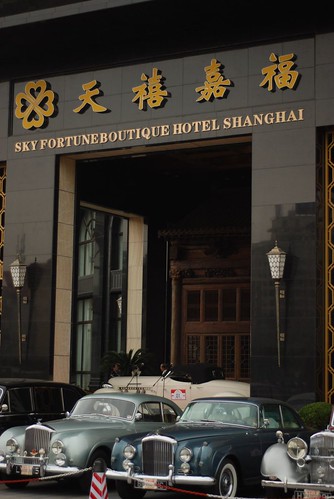
Like their Western brethren, Chinese dealers are used to profit margins between 3 percent and zilch. But now, more often than not, it’s south of nada. No wonder many Chinese dealers are following the worldwide trend, close their lot, and seek other employment. Like teaching English (see picture.) A third of them are expected to close shop by year’s end. The more vociferous ones are blaming the manufacturers for overstocking and too demanding sales targets. A familiar song for Western experts. A survey says that over 40 percent of Chinese car dealers in China make no money. A familiar song for Western experts. Ah, the joys of capitalism!

(Picture courtesy d_j_kingpin @ flickr.com)

Thursday, November 6, 2008

WSJ: China Won’t Save U.S. Automakers. Duh!

(First published by Bertel Schmitt in TheTruthAboutCars on November 5, 2008)


Ever since it lost its new hotness, this blog has been reporting that the Chinese car market has lost its new hotness. This blog also gave its readers a heads-up that China won’t save U.S. carmakers’ butts, as the Middle Kingdom had done in the past, when skyrocketing sales in China buttressed anorexic auto sales elsewhere on the planet (i.e. North America). That bit of news finally reached The Wall Street Journal [sub]. “China’s Car Market Loses Luster for Foreign Firms,” alliterates the WSJ, surprising everybody except this blog's readers. “Growth in China’s once-roaring auto market has slowed to a near-crawl, casting doubt on the country’s status as industry savior,” writes Patricia Jiayi Ho. Previously, Patricia penned articles titled “Ex-Tuskeege Airman Moore dies at age 82,” or “Badminton club to open in Arcadia,” so she’s clearly qualified to report on expiring markets, and the back-and-forth of the world economy. Patricia’s prose continues: “Foreign giants like General Motors and Ford Motor Co. have increasingly been looking to emerging markets like China and India to provide a much needed fillip to declining sales at home.” And look they did…

GM actually looked quite good for a while in China and had Volkswagen rattle in their jackboots in years’ past. Then, GM dropped the ball. Ford is a nobody in China. Ford’s feeble 240,879 units made in the first nine months don’t even rate a place amongst China’s top ten automakers. Officially, Ford doesn’t count at all in China, they hold only minority shares in two joint ventures. The WSJ wisely refrains from mentioning Chrysler. Chrysler was actually the first foreign carmaker in China. Kindof.

In 1983, then American Motors signed a deal with Beijing Automotive Works to replace its smoke belching Russian GAZ Jeeps with cheap Cherokees, a deal that makes some old-school Chinese still yearn for the Russian model. Chrysler let its first mover advantage fall fallow. “Its overall performance during the past two decades might politely be described as disappointing,” wrote Business Week, a year ago. Chrysler blames it on the Germans.Anyway, the Chinese car market is still growing.

Depending on who you ask or believe, growth is anywhere between 5 and 10 percent this year. Which sets China apart from waning Western Europe and especially from the atrophy formerly known as America. In GM’s Monday conference call, Mike DiGiovanni, GM’s chief sales analyst looked at the October figures, gulped, and said: “If you adjust for population growth, it’s the worst sales month in the post World War II era.” And then, in a rare case of clairvoyance, he muttered: “Clearly, we’re in a dire situation.” Message from China: “Sorry, can’t help ya! “

(Photo courtesy Otaku. Thank you!)

Going down? VeeDub China VP Gets Worried

(First published by Bertel Schmitt in TheTruthAboutCars on November 3, 2008)
How about this for tell me how you really feel: Volkswagen AG, China’s biggest car maker, told Bloomberg (of all people) that “the worst may yet to come” for China’s car market. This cheerful prediction was uttered by Soh Weiming, Volkswagen Group China’s Executive Vice President. Soh Weiming is no stranger to an uncertain future. The imminent ouster of the cigar-loving VP had been floated for years in Beijing and Wolfsburg. But like the Energizer Bunny, he keeps on going and going. And there he was to say that it would be “too early to estimate” the losses caused by the economic slowdown in China’s auto industry.
After a surge of 23 percent in the first two quarters of 2008, Volkswagen’s sales in China dropped 4.2 percent in the third quarter. SAIC, Volkswagen’s joint venture partner in China’s reported a 78 percent plunge in third-quarter profits. The company, which is also in bed with GM, said their vehicles sales growth was only nine percent in the first nine months. Last year, SAIC’s sales had ascended 24 percent. FAW, Volkswagen other joint venture partner, fared better; they reported a 62.39 percent rise in net profits for the first nine months. Soh Weiming made no predictions regarding Volkswagen’s sales in China. Which prompted Bloomberg to point to a government estimate that says that Volkswagen China sits on a pile of 170k unsold cars. Now we understand Soh Weiming’s feelings.

(Photo courtesy thestandard.com.hk. Thank you!)

Tuesday, November 4, 2008

How Porsche Buggered the Hedge Funds

(First published by Bertel Schmitt in TheTruthAboutCars on November 3, 2008)

So you thought Porsche financed the VW takeover by foisting overpriced floormats and trucks on their well-heeled buyers? Yesterday’s issue of Die Welt, Germany’s conservative newspaper, thinks different. They undug the dirt on Porsche’s takeover-machinations of Volkswagen. It’s a story that makes Cerberus look like a frisky puppy. It’s an account that makes banks and hedge funds look like morons.

In March 2005, Porsche Chief Wendelin Wiedeking, and his clever CFO Harald Härter traveled to the picturesque Salzburg. They presented to the Porsche/Piech clan their strategy to subjugate the auto giant Volkswagen. The cunning plan: Porsche buys VW for no money. Make that: Porsche bamboozles hedge funds– supposedly the smartest of the smart– into unwittingly forking over the cash.

The Porsche/Piech clan liked the plan, and it was set in motion. Unspoken, but obvious: that meeting included – virtually at least – Ferdinand Piech. As all car cognoscenti know, Ferdinand Piech owns a good chunk of Porsche, and serves as the head of Volkswagen’s Supervisory Board. Did he exercise the powers vested into him, and warned the shareholders of VW of the machinations? We don’t think so.

Using the whole arsenal of arbitrage, swaps, puts, straddles, fraptions, and butterflies, Porsche drove the VW share up, while the hedge funds, fixated on the fundamentals of the flopping auto market, sold short. Porsche used every available loophole of the German law: A swap for instance doesn’t need to be registered. Porsche owned more and more of VW without anyone noticing. Porsche/Piech controlled the news. They could buy low, sell high, and with leverage that would have put the awe in Archimedes. The proceeds were used to buy more stock (to move it) and more options (to make more money.)

Over the years, Porsche kept people guessing why they would invest into VW at all. Three years ago, Porsche announced to an astounded world that they bought 20 percent of VW’s stock. They positioned themselves as the benign white knight that kept VW’s vestigial virginity from being gang-raped by rabid Auslandskonzerne (foreign corporations.) If anybody asked where this would lead, no answers followed.

Did Porsche want just a small chunk of VW? Or a blocking minority of 25 percent? Or, gasp, would they go for 51 percent? When questioned, Wiedekind assuaged the markets: “We are not going for a blocking minority.” A few months later, Porsche had more than 25 percent. Reminded of what he had said before, Wiedekind smiled. He had not lied. A blocking minority was not what they had in mind. They wanted the whole kit and caboodle.

In the meantime, Porsche conducted the orchestra of financial instruments like a Kapital-Karajan. Their financial fiddling did not remain completely unnoticed. Says the Economist, a bit belatedly: “The risks of short selling should have been apparent to the brightest hedge-fund managers in Mayfair and Greenwich because of widespread suspicion that Porsche, a dab hand in currency-derivatives markets, was also mucking about with options on VW stock.”

Indeed, Morgan Stanley warned clients on October 8th to refrain from playing “billionaire’s poker” by betting against Porsche. Max Warburton of Alliance Bernstein correctly predicted Porsche could make billions by squeezing short-sellers of VW’s shares. Porsche’s answer? “A fairy-tale.”

Likewise, Porsche’s balance sheet got curiouser and curiouser: In fiscal 2005/2006, Porsche showed a profit of €2.1b before tax, and of that, a whopping €900m were “non recurring items” – an euphemism for gains from speculation. “Currently, Porsche makes only a quarter of its profits from building its luxury cars,” says Die Welt, “and it won’t be long before their profits exceed their annual sales.” Which stood at €7.4b as of the last fiscal year.

The stock yo-yo of last week may have brought Porsche close, if not beyond that elusive target. In an all-out final attack, Porsche drove the hedgies into panic-buying, psyched funds managers into loading up on VW at all cost. Then, Porsche sold their options and made an even bigger killing. With an utter deficiency of shame, they spun even that as “providing a greater free-float to a constrained market.”

The funny thing: Porsche may get away with the murder of the hedgies. Actually, in Germany, Porsche’s backs are being slapped with Schadenfreude. One CEO of another company that is part of the DAX, wisely said off the record: ”How Porsche engineered the financing of the VW takeover is exemplary. Ingenious!” Ulrich Hocker of the Deutsche Schutzgemeinschaft für Wertpapierbesitz (German Protective Association of Shareholders) grins: “The losers are no small stockholders. This time, it was professionals who should have known the risks.”

The losers see it different: “Stock manipulation” grumbles DWS, the fonds of Germany’s banking giant Deutsche Bank. Unless totally dead, losers have a tendency to get even. Sneers the Economist: “Porsche may struggle to sell 911s to hedge-fund managers for years and years to come.” That may be the most benign revenge of the many that are being hatched in the hedges.

(Photo - Porsche in Salzburg, Austria - courtesy MikeDowdNJ. Thank you!)

The Latest In The Porsche/VeeDub Soap

(First published by Bertel Schmitt in TheTruthAboutCars on November 3, 2008)

Never a dull moment in the ant-eats-elephant soap, a.k.a. Porsche’s takeover of VeeDub. On the heels of what the newspaper Die Welt called the “craziest week in the history of the German benchmark index DAX,” VW’s stock makes headlines again. Or, rather, the headlines are made by a minority owner, the state of Lower Saxony. Nearly forgotten in the broo-haha, that German province, home of Volkswagen’s headquarters Wolfsburg, owns 20.1 percent of VeeDub’s stock. By the dubious virtue of the so-called “Volkswagen-Gesetz” (VW law), Wolfburg’s stake gives the state of Lower Saxony veto power over just about anything they like or dislike. Originally, that law was intended to ward-off hostile takeovers by foreign powers. (Remember GM?) Now, it provides the legal means for provincial politics. Niedersachsen’s Governor Christian Wulff declared yesterday: “Profits going to Porsche? Not if you ask me.” And Porsche will have to ask Mr. Wulff.


If Porsche holds 75 percent, they can enter into what’s called a “controlling agreement.” They book all of VW’s profits as Porsche’s, and run VW from Stuttgart-Zuffenhausen. If there wouldn’t be that little detail called Volkswagen-Gesetz. Which the EU wants to abolish, BTW, to the applause of Porsche. Still, the law is on the books. And if Porsche doesn’t make nice with Lower Saxony, their best laid plans go the way of mice and men. In the meantime, Herr Wullf uses his minority position to throw gubernatorial dirt in Porsche’s direction: “It’s doubtful that Porsche can afford the 75% anyway.” Ha, take that, you upstart little dwarfs! (In the next installment of the saga from soapland: The inside story of how Porsche got VW on the cheap. Makes Cerberus look like a playful puppy.)
(Picture courtesy of  NDR. Thank you!)

Monday, November 3, 2008

Chinese High-Rollers High On Rollers

(First published in TheTruthAboutCars on November 2, 2008)

It’s not yet that Chinese mothers admonish their one-and-only child to “eat up, there are children starving back in America.” But it’s getting close. Case in point: This weekend, another Rolls-Royce showroom opened in Shenzen, Gasgoo reports. It’s the seventh Rolls Royce retail location in China. Another one, located in China’s industrial center Ningbo, will open its doors in a few months. Rollers are on a roll in China. I counted two Phantoms alone in the underground garage of my Beijing building.

At the Shenzen opening, Rolls presented their new Rolls-Royce Phantom Coupé to the Chinese public. It’s their entry model. “Nearly two-thirds of Coupé customers worldwide have not owned a Rolls-Royce before,” said Jenny Zheng, Rolls-Royce Motor Cars’ General Manager for Greater China. BMW are thanking their lucky stars…

While Rolls-Royce’s parent BMW saw its global sales slide by 15 percent in September, Rolls flipped their Emily at the flagging economy, and increased sales by seven percent in the same month. Year-to-date, Rolls-Royce sales rose a record 43 percent year-on-year. Granted, that total was only 827 cars. But in this economy, every car counts. Especially as each example retails at $415k base - and no true Roller proprietor will get caught in a riff-raff reeking base model. “There’s been an 80 per cent increase in the number of vehicles sold this year with some form of bespoke element,” says the British Autocarmagazine with the appropriate nasal accent. Not surprisingly, sales in the United Arab Emirates are up by around 70 per cent. China? Fifty percent rise.

You think it’s a fluke? Further in the same vein(ity), New Delhi’s Financial Express reports “that Mercedes Benz India has registered an impressive 47% growth in car sales for the first 10 months of the current calendar year.” Sales of C-class Benzes more than doubled. Holy cow! And by the way, Time Magazine already said two years ago that Chinese children are getting fat.

(Picture courtesy Kaeyau. Thank you!)